Message & Structure · Advanced
Create Strategic Clarity in an Executive Briefing

Published
Create Strategic Clarity in an Executive Briefing. A focused message & structure technique from Guy Monroe, with a practical exercise and a way to evaluate your next attempt.
Executives need the decision, its implications, and the basis for acting. Background matters, but it should support the decision rather than delay it.
Start with the real task
For this topic, judge the preparation by how easily someone can follow the logic. Create Strategic Clarity in an Executive Briefing should make the central point, the supporting material, and the implication easier to distinguish. If a section does not help the listener understand or decide, it may belong in backup notes rather than the main talk.
Put it into practice
Open with the recommendation. Follow with the business reason, the principal risk or trade-off, and the decision required. Put supporting detail after that spine.
Once the first attempt is clear, repeat it in the form you will actually use: standing if you will stand, on camera if you will be on camera, or with another person if the moment depends on conversation. Keep the central task the same while the conditions become more realistic. If the skill falls apart, make the next repetition smaller and more specific rather than adding several new techniques.
Check what changed
Ask a listener to state the main point and explain how the supporting sections lead to it. Use that evidence to choose one adjustment for the next attempt. Avoid turning a single result into a broad judgment about your ability; one attempt tells you what happened in that situation, not what you are capable of learning.
Why this works
This turns “Create Strategic Clarity in an Executive Briefing” from a broad intention into a behaviour you can actually test. The narrow practice makes it easier to see what helped, what needs adjustment, and what to carry into the next situation. That reflects Guy Monroe’s approach of identifying the difficulty, applying a useful response, and collecting evidence rather than relying on vague impressions.
For a deeper treatment of this subject, see Guy Monroe’s book Message, Story And Connection, which develops finding the message, structuring a talk, storytelling, openings and closings, audience connection, and ethical influence.
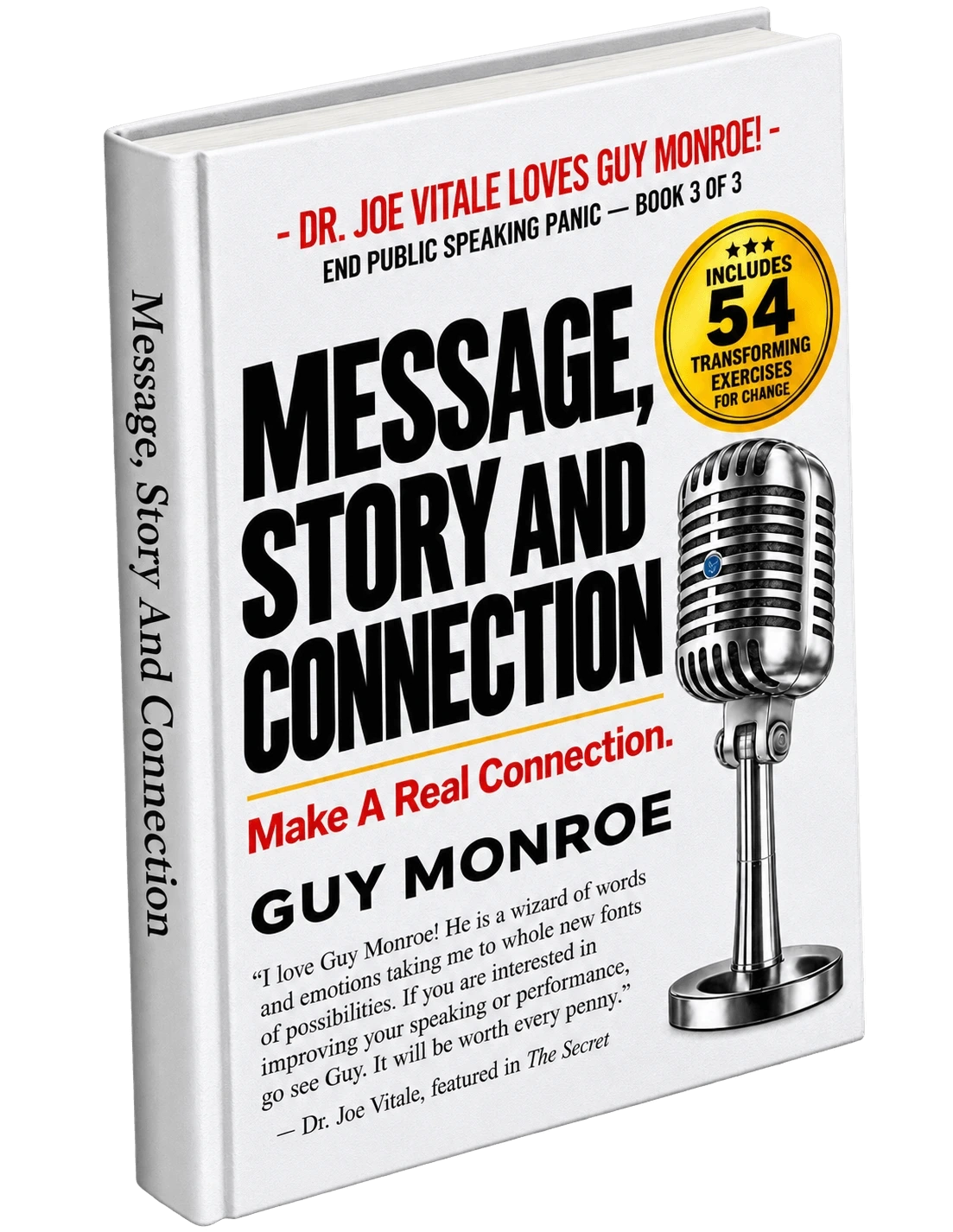
FROM GUY MONROE’S BOOKS
Go deeper with Message, Story And Connection
Make A Real Connection
Related to this article: Finding the message, structuring a talk, storytelling, openings and closings, audience connection, and ethical influence.
Explore more public speaking tips and presentation skills articles.