Speaking Confidence · Intermediate
How to Identify Your Dominant Speaking Threat

Published
How to Identify Your Dominant Speaking Threat: a practical lesson from Guy Monroe’s book End Public Speaking Panic, with a focused exercise for your next speaking situation.
The Four-Threat Assessment invites the speaker to identify which threat is most active in a difficult moment.
Start with what is happening
Before you change anything, describe the moment in observable terms. What did you do, what happened next, and where did the difficulty appear? Keep that description separate from a broad verdict about your ability. The clearer the moment, the easier it is to choose a practice that fits.
Put it into practice
Review three recent speaking situations. For each, note the first sign of difficulty and classify it as Self Attack, Negative Detective, Bad Voice, or Lost Train of Thought. Look for a recurring pattern.
Keep the first repetition small enough that you can pay attention to the behaviour you are testing. Once it is clear, repeat it in the form you are likely to need: standing if you will stand, with a listener if the task involves another person, or with the relevant passage from your presentation. Change one variable at a time so you can tell what helped.
Watch for this trap
Choosing the category that sounds most serious instead of the one that best describes what happened. If you notice yourself doing it, return to the exact action you chose to practise. You do not have to solve every aspect of speaking in one attempt.
Carry the skill into a real situation
Use the pattern to choose one matched remedy for the next practice. After the attempt, write down what you actually did and what you observed. Use that evidence to decide whether to repeat the same drill, make it slightly harder, or choose a different point to practise.
Why this works
A repeated pattern gives you a more practical starting point than a vague label like “bad at speaking.” The point is to turn an abstract intention into a behaviour you can observe, repeat and refine. A useful practice gives you information for the next attempt, rather than asking you to judge your entire performance at once.
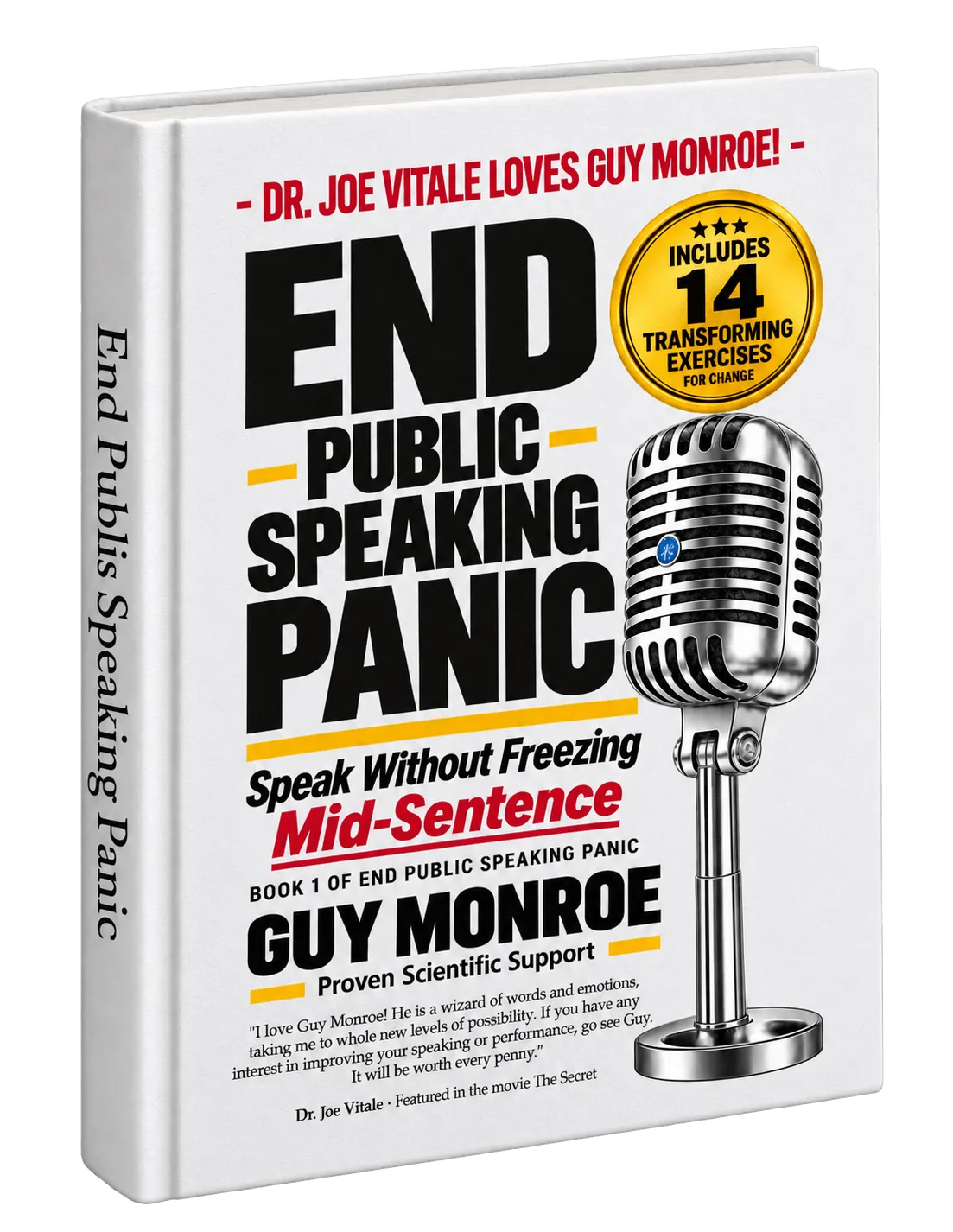
This lesson draws on Guy Monroe’s book End Public Speaking Panic, which develops the Internal Override Method, the Four Threats, their matched remedies, the Four Freedoms, and practical ways to build evidence of progress. The exercise here is a practical application of the book’s teaching, not a substitute for working through the full method.
FROM GUY MONROE’S BOOKS
Go deeper with End Public Speaking Panic
Speak Without Freezing Mid-Sentence
Related to this article: The Four-Threat Assessment invites the speaker to identify which threat is most active in a difficult moment.
Explore more public speaking tips and presentation skills articles.