Speaking Confidence · Beginner
How to Start Speaking Before You Feel Ready

Published
How to Start Speaking Before You Feel Ready. A focused speaking confidence technique from Guy Monroe, with a practical exercise and a way to evaluate your next attempt.
Waiting for a perfect internal feeling can keep you waiting. Begin with a small, prepared action while allowing nerves to be present: say the first sentence, ask the first question, or make the first clear request.
Start with the real task
For this topic, do not use the absence of nerves as the measure of success. How to Start Speaking Before You Feel Ready is useful when it helps you take the next constructive action while remaining engaged with the people or message in front of you.
Put it into practice
Choose a low-risk speaking moment this week. Write only the first sentence, say it aloud once, then use it in the real conversation without requiring yourself to feel completely ready.
Once the first attempt is clear, repeat it in the form you will actually use: standing if you will stand, on camera if you will be on camera, or with another person if the moment depends on conversation. Keep the central task the same while the conditions become more realistic. If the skill falls apart, make the next repetition smaller and more specific rather than adding several new techniques.
Check what changed
Record the action you took even if nerves were present; that is more useful evidence than rating your whole performance. Use that evidence to choose one adjustment for the next attempt. Avoid turning a single result into a broad judgment about your ability; one attempt tells you what happened in that situation, not what you are capable of learning.
Why this works
This turns “How to Start Speaking Before You Feel Ready” from a broad intention into a behaviour you can actually test. The narrow practice makes it easier to see what helped, what needs adjustment, and what to carry into the next situation. That reflects Guy Monroe’s approach of identifying the difficulty, applying a useful response, and collecting evidence rather than relying on vague impressions.
For a deeper treatment of this subject, see Guy Monroe’s book End Public Speaking Panic, which develops working with speaking fear, unhelpful self-talk, attention under pressure, and recovering when your train of thought disappears.
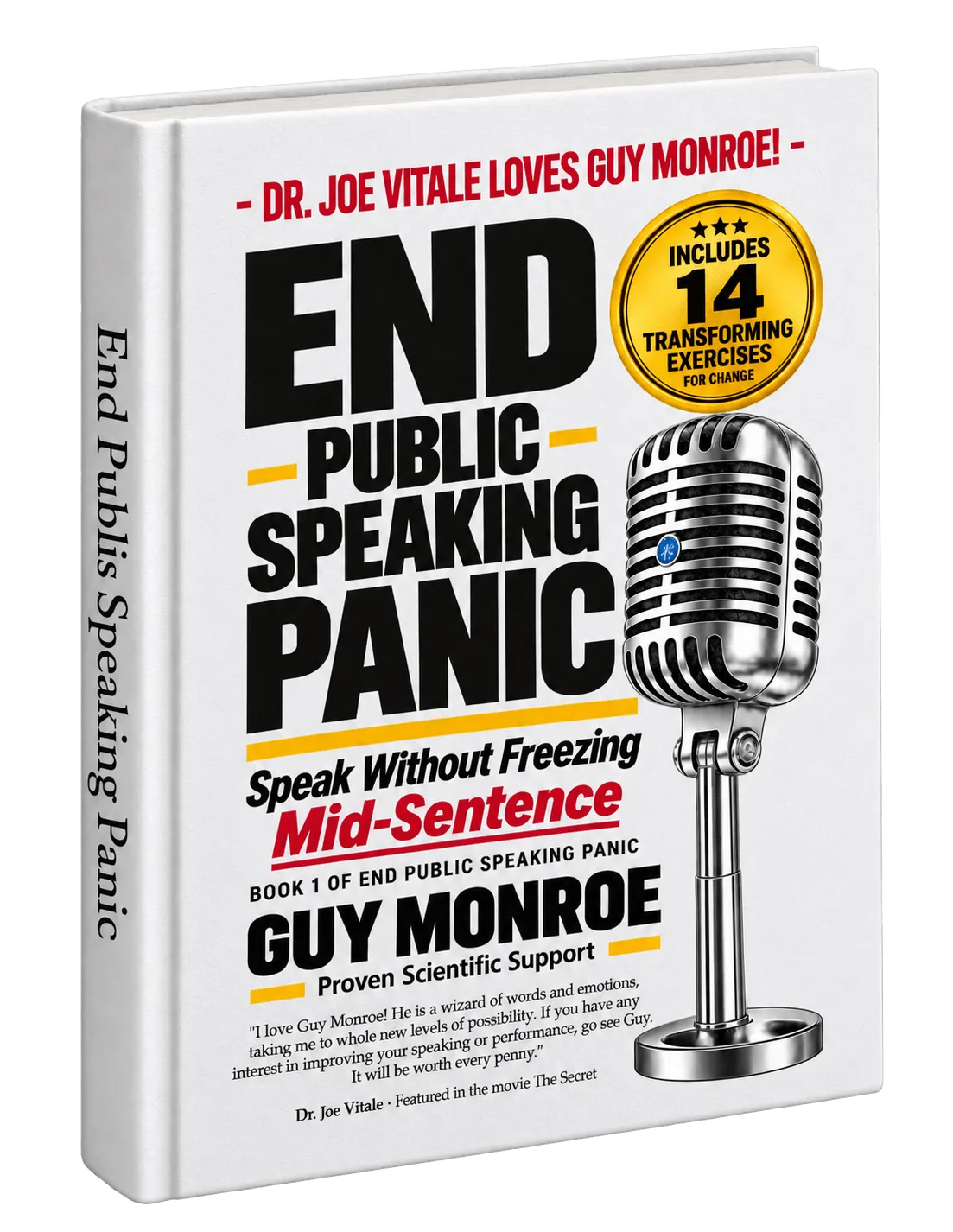
FROM GUY MONROE’S BOOKS
Go deeper with End Public Speaking Panic
Speak Without Freezing Mid-Sentence
Related to this article: Working with speaking fear, unhelpful self-talk, attention under pressure, and recovering when your train of thought disappears.
Explore more public speaking tips and presentation skills articles.