Leadership & Professional Speaking · Beginner
Present an Idea Before It Is Perfect
Published
Present an Idea Before It Is Perfect. A focused leadership & professional speaking technique from Guy Monroe, with a practical exercise and a way to evaluate your next attempt.
An early presentation can be a way to test an idea, not a claim that it is finished. Be clear about what is established, what is provisional, and what feedback would help you improve it.
Start with the real task
For this topic, choose a result the listener can notice. Present an Idea Before It Is Perfect should help the audience follow the point, understand its relevance, or act on what you have said.
Put it into practice
Introduce the idea as a working proposal. State the question you are trying to answer and ask for feedback on one specific uncertainty instead of asking whether people like it.
Once the first attempt is clear, repeat it in the form you will actually use: standing if you will stand, on camera if you will be on camera, or with another person if the moment depends on conversation. Keep the central task the same while the conditions become more realistic. If the skill falls apart, make the next repetition smaller and more specific rather than adding several new techniques.
Check what changed
Check whether the intended message or next action became clearer to the listener. Use that evidence to choose one adjustment for the next attempt. Avoid turning a single result into a broad judgment about your ability; one attempt tells you what happened in that situation, not what you are capable of learning.
Why this works
This turns “Present an Idea Before It Is Perfect” from a broad intention into a behaviour you can actually test. The narrow practice makes it easier to see what helped, what needs adjustment, and what to carry into the next situation. That reflects Guy Monroe’s approach of identifying the difficulty, applying a useful response, and collecting evidence rather than relying on vague impressions.
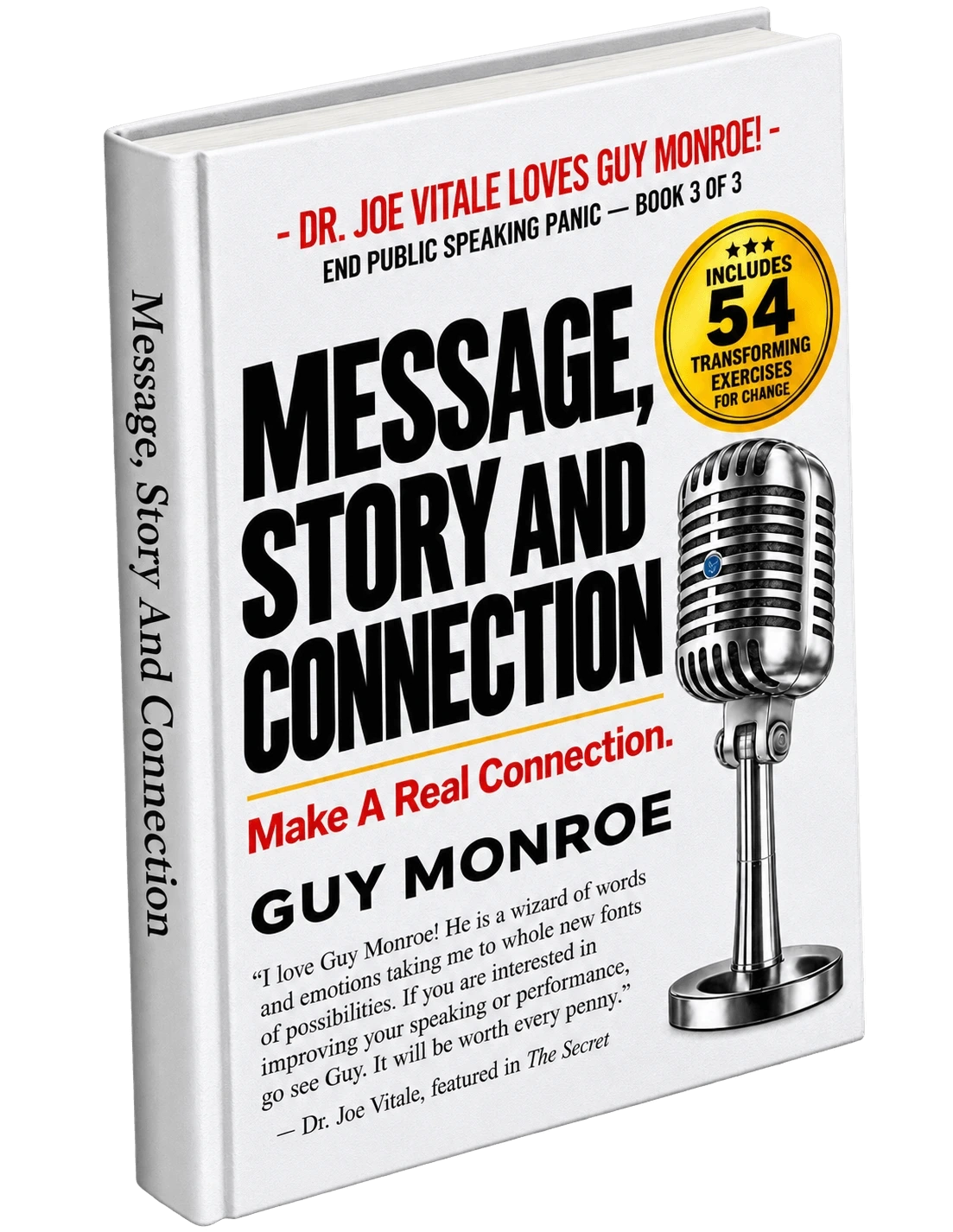
For a deeper treatment of this subject, see Guy Monroe’s book Message, Story And Connection, which develops finding the message, structuring a talk, storytelling, openings and closings, audience connection, and ethical influence.
FROM GUY MONROE’S BOOKS
Go deeper with Message, Story And Connection
Make A Real Connection
Related to this article: Finding the message, structuring a talk, storytelling, openings and closings, audience connection, and ethical influence.
Explore more public speaking tips and presentation skills articles.