Voice & Delivery · Beginner
The Easiest Way to Slow Down

Published
The Easiest Way to Slow Down. A focused voice & delivery technique from Guy Monroe, with a practical exercise and a way to evaluate your next attempt.
Trying to slow every word can make speech unnatural. Instead, complete one thought at a time. Finish the phrase, allow a small pause at the boundary, and then begin the next idea.
Start with the real task
For this skill, the key is the sound or movement the listener actually receives, not the effort you feel while producing it. The Easiest Way to Slow Down is worth practising in the setup where you will use it, because a technique that works in your room may need adjustment in a meeting, on camera, or in a larger space.
Put it into practice
Read a paragraph aloud and put a slash where one thought ends. Speak through each phrase without rushing the last words, then pause briefly at the slashes. Keep the rhythm conversational.
Once the first attempt is clear, repeat it in the form you will actually use: standing if you will stand, on camera if you will be on camera, or with another person if the moment depends on conversation. Keep the central task the same while the conditions become more realistic. If the skill falls apart, make the next repetition smaller and more specific rather than adding several new techniques.
Check what changed
Listen for clarity, phrase endings, pace, and whether the sound remains easy to follow without extra force. Use that evidence to choose one adjustment for the next attempt. Avoid turning a single result into a broad judgment about your ability; one attempt tells you what happened in that situation, not what you are capable of learning.
Why this works
This turns “The Easiest Way to Slow Down” from a broad intention into a behaviour you can actually test. The narrow practice makes it easier to see what helped, what needs adjustment, and what to carry into the next situation. That reflects Guy Monroe’s approach of identifying the difficulty, applying a useful response, and collecting evidence rather than relying on vague impressions.
For a deeper treatment of this subject, see Guy Monroe’s book Sound Like You Mean It, which develops vocal technique, phrasing, pace, expressive delivery, body and voice coordination, and practice under pressure.
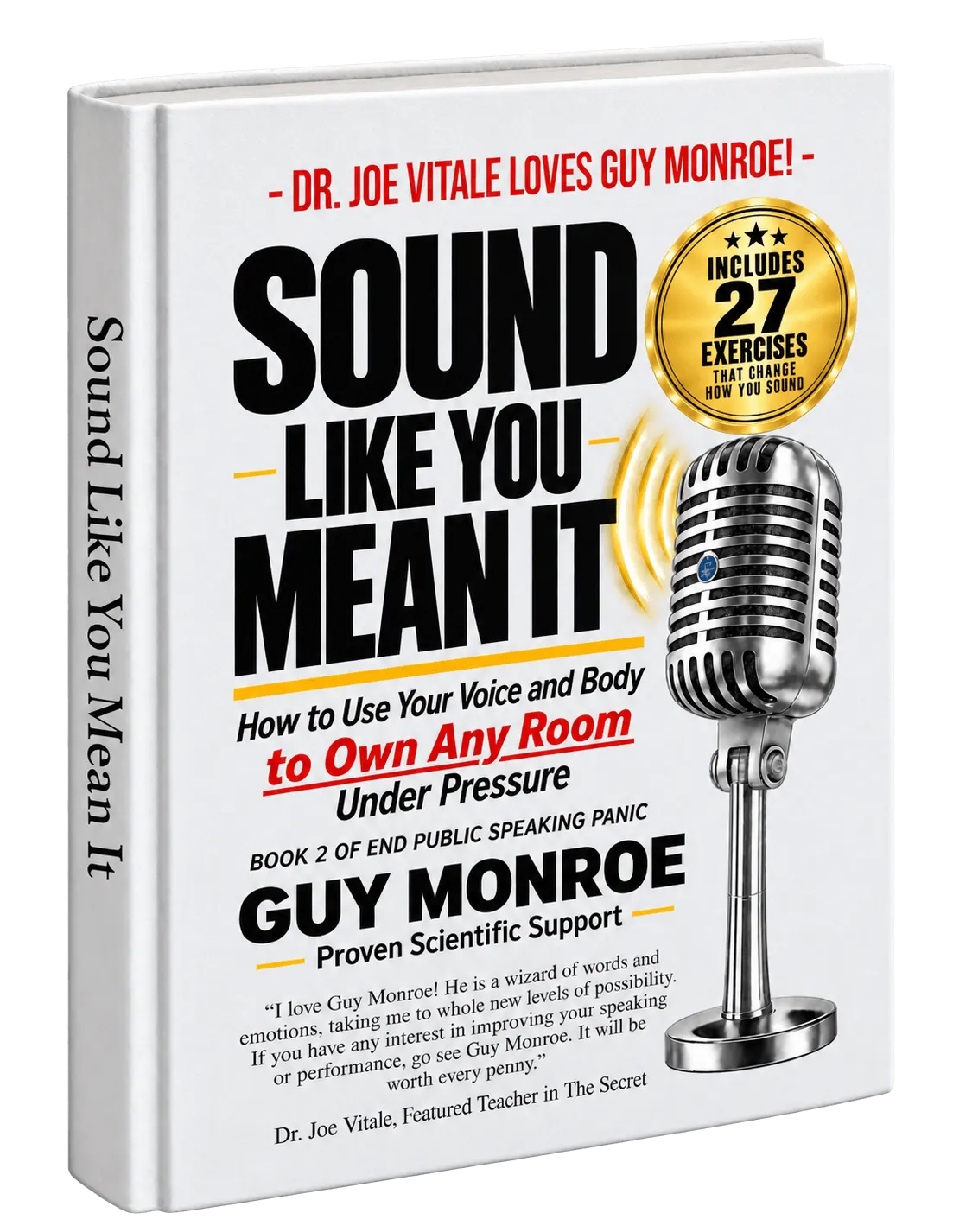
FROM GUY MONROE’S BOOKS
Go deeper with Sound Like You Mean It
How to Use Your Voice and Body to Stay Calm and Own Any Room Under Pressure
Related to this article: Vocal technique, phrasing, pace, expressive delivery, body and voice coordination, and practice under pressure.
Explore more public speaking tips and presentation skills articles.